The pan that once appeared on the stove every evening has not moved in weeks. Fresh groceries have been replaced by crackers, cereal, or takeout containers. When asked about dinner, an aging parent says, “I’m just not hungry,” or “Cooking for one is not worth the trouble.”
Sometimes the explanation is exactly that simple. Preferences change. A person may enjoy lighter meals or decide that elaborate cooking no longer deserves the effort.
But cooking is not one task. It is a chain of decisions and physical actions: planning a meal, checking ingredients, shopping, carrying groceries, opening packages, standing at the counter, following steps, managing heat, remembering timing, and cleaning afterward.
When an older adult stops cooking, the most useful question is not, “Why aren’t you eating properly?” It is, “Which part of preparing a meal has become difficult?”
The answer can reveal whether the person needs a simpler routine, practical assistance, medical evaluation, or a different kind of support altogether.
Cooking Is a Daily-Life System
A familiar meal can look effortless from the outside. In reality, it depends on several abilities working together.
Preparing dinner may require someone to:
Decide what to eat
Remember what is already in the kitchen
Make a shopping list
Travel to the store or place an order
Carry and put away groceries
Read labels and follow directions
Chop, lift, stir, and reach
Stand long enough to complete the meal
Use the stove or oven safely
Coordinate several steps at once
Notice spoiled food
Clean the kitchen afterward
A change at any point can bring the entire routine to a stop. This is why simply delivering groceries or leaving prepared meals may not solve the actual problem.
Physical Effort May Have Become Too High
An older adult may still enjoy cooking but no longer have the energy, balance, strength, or comfort to complete it.
Arthritis can make jars, knives, and heavy pans difficult to manage. Back or joint pain can make standing at the counter exhausting. Changes in balance may make reaching into low cupboards or carrying hot food feel unsafe. Reduced vision can make labels, measurements, and stove settings harder to read.
The parent may not describe these difficulties directly. Instead, they may say cooking is “too much trouble” or insist that they prefer snacks.
Watch for clues such as:
Avoiding dishes that require chopping or lifting
Leaving heavy cookware unused
Sitting down repeatedly during meal preparation
Choosing only foods that require no opening or preparation
Bruises, small burns, dropped dishes, or recent near-falls
Difficulty carrying groceries into the home
Practical support can sometimes preserve the parts of cooking the person still enjoys. Someone else might shop, move heavy items, prepare ingredients, or clean up while the older adult continues seasoning, stirring, choosing recipes, or serving the meal.
Appetite, Taste, or Health May Have Changed
Stopping cooking is not always about the kitchen. The person may have less interest in food.
Appetite can change with illness, grief, depression, medications, dental problems, difficulty chewing or swallowing, and changes in taste or smell. Health conditions and changes in home life, mobility, income, medicines, and appetite can all make healthy eating more difficult as people age.
Families should notice patterns rather than judge a single meal.
Possible concerns include:
Unintended weight loss
Clothing becoming noticeably looser
Food repeatedly left untouched
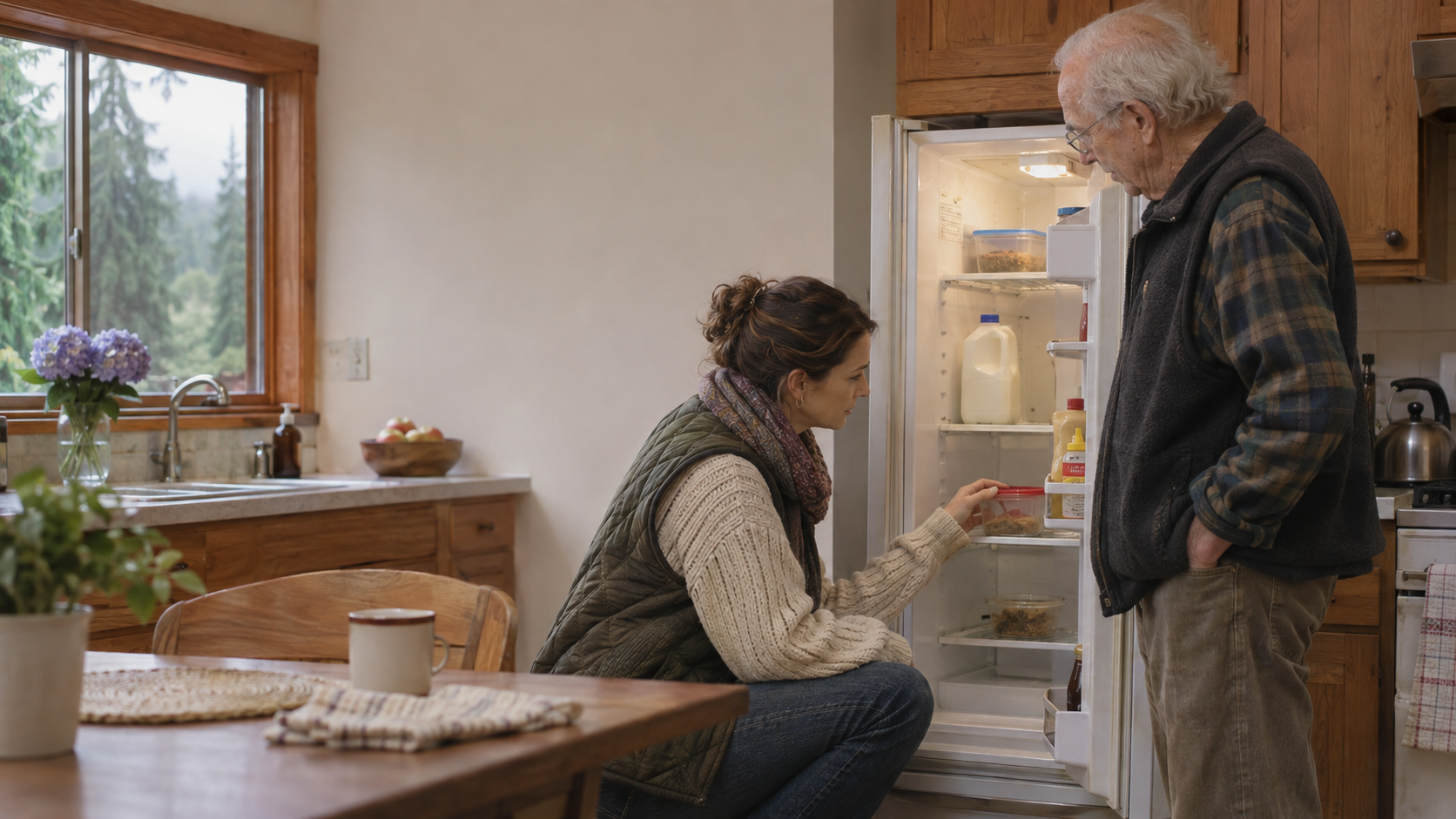
A nearly empty refrigerator
Relying on the same low-nutrient snack for several meals
Coughing, choking, or discomfort while eating
New difficulty chewing
Fatigue, dizziness, or increasing weakness
Drinking very little throughout the day
Do not assume a nutrition drink or meal-delivery subscription will address the cause. Persistent appetite changes, swallowing difficulty, unexplained weight loss, or signs of dehydration should be discussed with a healthcare provider.
Memory and Planning Can Affect Meals Before a Diagnosis Exists
Cooking depends on memory, attention, sequencing, judgment, and timing. A person does not need to forget how to cook entirely for the process to become confusing.
Early changes may look like:
Buying the same ingredient repeatedly
Forgetting items that were just purchased
Leaving food to spoil
Losing track of steps in a familiar recipe
Beginning several tasks without finishing them
Burning food or leaving the stove on
Becoming overwhelmed by choosing what to prepare
Eating at unusual times or forgetting whether a meal was eaten
One burned pan does not establish dementia. Stress, poor sleep, depression, medication effects, illness, and normal distraction can also affect concentration and memory.
However, repeated difficulty following familiar recipes or managing the kitchen safely deserves attention. The National Institute on Aging identifies trouble following recipes, eating poorly, and difficulty completing familiar daily activities as reasons to speak with a healthcare provider.
If memory changes are affecting meals, families may want to explore Dementia and Memory Care while arranging an appropriate medical evaluation. Home care can support routines and observation, but it cannot determine the cause of cognitive changes.
The Missing Ingredient May Be Another Person
Cooking often carries a social meaning that disappears when someone begins eating alone.
A parent who once cooked for a spouse or family may lose interest after bereavement, retirement, or a change in household. The issue may not be the food. It may be that planning and preparing a meal no longer feels meaningful when no one is expected at the table.
Mood changes can also affect appetite, motivation, energy, and concentration. Depression is not a normal part of aging, and it does not always appear as visible sadness. Withdrawal, irritability, sleeping changes, loss of interest, and statements of hopelessness may be more noticeable than tears.
Shared meals can help restore some structure and connection. A caregiver, friend, or family member might prepare food alongside the older adult rather than simply placing a plate in front of them.
Companionship is not treatment for depression. Persistent mood or appetite changes should be discussed with a healthcare provider. Still, eating with another person can make a meal feel like part of the day again rather than another task to avoid.

Confidence Can Disappear After One Difficult Experience
Sometimes an older adult stops cooking after a fall, a small kitchen fire, an episode of dizziness, or a meal that went badly.
The event may have resolved, but confidence did not return. The person may worry about dropping a pan, forgetting the stove, or becoming unsteady while carrying hot food.
Families may misread this avoidance as laziness or stubbornness.
Ask what happened before the routine changed. A specific event can point toward a specific solution, such as rearranging the kitchen, changing when meals are prepared, using simpler cooking methods, or having someone present during the most demanding parts.
Does Stopping Cooking Mean an Older Adult Needs Home Care?
Not automatically.
First determine whether the change is a preference, a temporary response to illness or grief, or part of a broader change in daily function.
Look beyond the stove:
Is the person eating regular meals from another source?
Are weight and energy reasonably stable?
Can they shop, order food, and store it safely?
Are they managing other familiar activities?
Is the kitchen clean enough to use safely?
Is food being forgotten, spoiled, or left heating?
Has someone else quietly taken over meal-related tasks?
An older adult who happily orders balanced meals and eats well may not have a problem at all.
A person who says they have stopped cooking but is also losing weight, skipping meals, forgetting food, or becoming weaker needs a closer look.
How to Ask Without Turning Dinner Into an Argument
Food is personal. It carries preferences, culture, independence, and memories. Approaching the issue as a correction can make an older adult defensive.
Avoid opening with:
“You need to eat better.”
“You cannot live on snacks.”
“We need to take over your meals.”
Begin with curiosity and a specific observation:
“I noticed you have not been using the stove lately. Has cooking become uncomfortable?”
“Which part of making dinner feels like the most work?”
“Would shopping, preparation, or cleanup be the most useful thing to take off your plate?”
“Are there foods that are easier or more enjoyable for you now?”
“Would you rather cook together, have meals prepared, or try something else?”
The purpose is not to win an argument about nutrition. It is to identify the obstacle while keeping the older adult involved in the decision.
Match the Support to the Barrier
The best solution depends on why cooking stopped.
If shopping is the problem
Arrange grocery delivery, transportation, or help carrying and putting away food.
In Seattle and King County, hills, wet weather, traffic, and limited mobility can turn a simple shopping trip into the hardest part of the process.
If physical preparation is the problem
Help with chopping, lifting, opening containers, standing tasks, or cleanup. Prepare ingredients in advance so the older adult can continue the parts of cooking they enjoy.
If planning feels overwhelming
Create a short rotating menu, a visible shopping list, or a predictable meal schedule. Reduce choices without removing control.
If eating alone is the problem
Plan shared meals, community meals, family video calls during lunch, or regular caregiver visits that include meal preparation and conversation.
If safety or memory is the concern
Arrange medical evaluation and consider supervision during cooking. Avoid relying only on reminders if the person cannot consistently manage heat, timing, or food safety.
If the family cannot cover every meal
Support through Home Care Aides or In-Home Care can include grocery assistance, meal preparation, companionship, and observation of changes in appetite or daily function.
The caregiver should preserve participation rather than automatically taking over.
When to Contact a Healthcare Provider
Families should seek medical guidance when the change is sudden, persistent, or accompanied by other concerns.
Contact a healthcare provider if there is:
Unintended or rapid weight loss
Persistent loss of appetite
Coughing, choking, or difficulty swallowing
Increasing weakness, dizziness, or dehydration
New confusion or significant memory changes
Repeated stove or food-safety incidents
Ongoing sadness, withdrawal, or loss of interest
A major change following a new medication or illness
A physician-led perspective asks two questions at once: “What support would make meals easier?” and “Why did this familiar ability change?”
Through Medical Oversight and Advocacy, families can connect caregiver observations with the older adult’s broader health picture. Home care does not replace medical assessment, but regular observation can help families describe what is actually happening between appointments.
The Goal Is Not Necessarily to Get Them Cooking Again
Success does not have to mean returning to elaborate meals or using the stove every evening.
The real goal is for the older adult to eat safely and adequately in a way that still reflects their choices.
That might mean cooking together twice a week, preparing simple cold meals, reheating familiar dishes, sharing dinner with a caregiver, or receiving help with every step except choosing what goes on the plate.
When an aging parent stops cooking, pay attention without jumping to a conclusion. Find the point where the routine became difficult. That point often tells the family far more than the untouched stove.
If meal preparation, shopping, or eating alone has become a recurring obstacle, Schedule a Consultation with Elite Care Northwest to discuss practical support that fits the person’s routines, health considerations, and preferences.