Aging at Home Takes More Than an Aging-Ready House
A familiar home can hold decades of ordinary life: coffee in the same kitchen, neighbors who know each other by name, a favorite chair positioned near the window, and routines that require little thought.
It is easy to understand why so many people want to stay.
According to AARP’s 2024 Home and Community Preferences Survey, 75% of adults age 50 and older would like to remain in their current homes as they age. Seventy-three percent hope to remain in their communities.
That preference has particular relevance in the Pacific Northwest. Washington’s population is getting older, with adults age 65 and older now representing 18.3% of the state’s population, according to the U.S. Census Bureau.
Yet there is an important difference between living in a home for many years and having a home that can continue supporting someone as their needs change.
Aging in place is not simply staying put
Aging in place means continuing to live safely and as independently as possible in one’s own home and community.
The phrase sometimes creates the impression that success depends primarily on home modifications. Grab bars, better lighting, step-free entrances, and accessible bathrooms can certainly help. But the home is only one part of the plan.
Successful aging in place usually depends on four forms of readiness:
The home supports safe movement
Daily routines remain manageable
Health changes are recognized and addressed
Reliable people and services are available when needed
If one of these areas begins to weaken, the others often have to do more work.
A safer bathroom does not solve missed meals. A medical alert device cannot provide transportation to an appointment. A nearby adult child may help with groceries but may not be available every morning or during an unexpected hospital discharge.
The more useful question is not simply, “Can Mom stay in her house?”
It is, “What would make staying in her house safe and sustainable?”
The Pacific Northwest has its own aging-at-home realities
Homes and neighborhoods across Seattle and King County vary widely. Some older homes have narrow staircases, bedrooms on upper floors, steep entrances, or bathrooms that were not designed with changing mobility in mind.
The regional environment matters, too.
Wet walkways and entryways can become slippery. Dark winter afternoons may make poor indoor or outdoor lighting more noticeable. Hills can affect walking and transportation. Family members may live only a few miles away but still face long travel times because of traffic, work, or ferry schedules.
These conditions do not mean that an older adult must move. They simply become part of the planning.
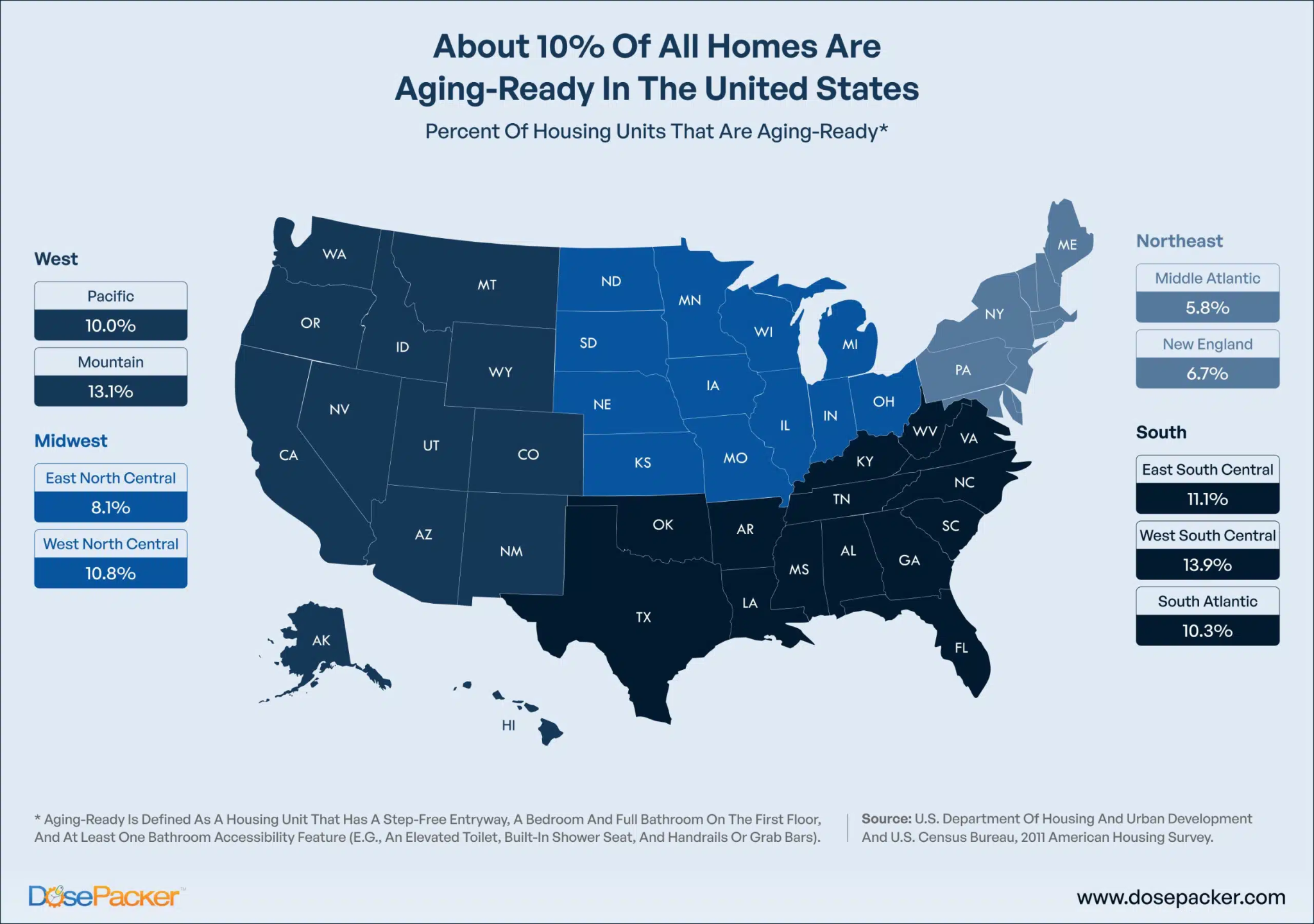
An older infographic based on the 2011 American Housing Survey estimated that approximately 10% of homes in the Pacific region met a specific “aging-ready” definition. That definition required a step-free entrance, a bedroom and full bathroom on the entry level, and at least one bathroom accessibility feature.
Because the data are historical, the percentage should not be treated as a description of today’s housing supply. However, the underlying message remains relevant: many homes were not originally designed around the needs people may develop later in life.
What makes a home ready for aging?
A home does not need to be completely remodeled to become more supportive. Families can begin by looking at how the person actually moves through the home during an ordinary day.
Consider questions such as:
Is the entrance safe in wet weather?
Are the bedroom and main bathroom easy to reach?
Is there enough lighting along frequently used paths?
Are medications, food, and household items accessible?
Would a walker fit through the most important spaces if one became necessary?
Is there a safe way to call for help?
Can the person manage stairs when tired, carrying something, or recovering from an illness?
Start with the changes that address current risks. Loose railings, unstable rugs, cluttered walkways, and poor lighting may deserve attention before a large renovation.
The National Institute on Aging recommends reviewing the home room by room and reassessing it as needs change. A home that works well at age 72 may need a different arrangement after an injury, hospitalization, or change in balance.
Home readiness is only one layer
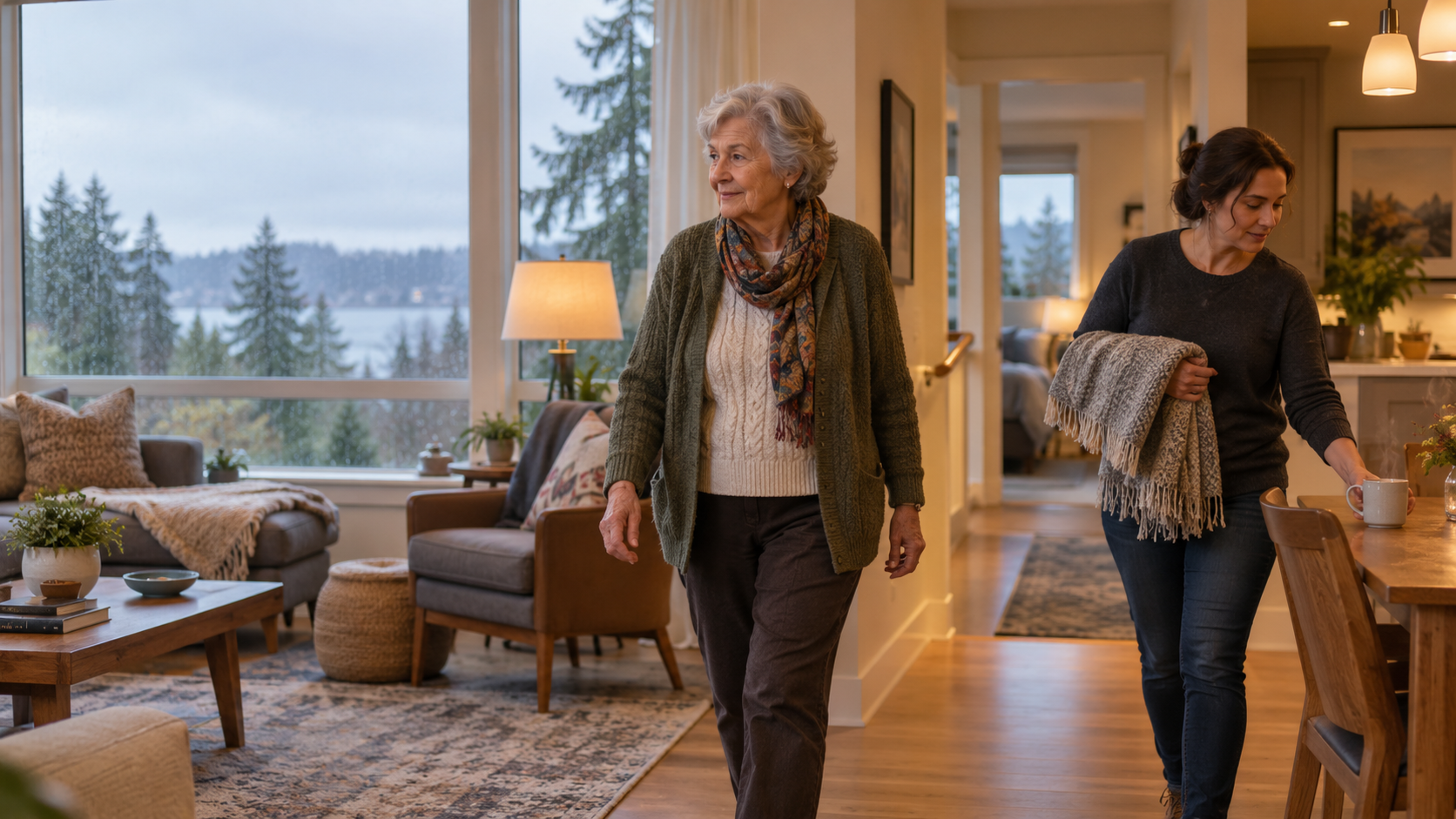
Families sometimes focus so heavily on the physical house that they miss changes in everyday life.
A person may walk through the home without difficulty but struggle to plan meals, keep up with laundry, remember appointments, or arrange transportation. Another may appear completely independent during a Sunday visit while spending most weekdays alone.
This is where home-based care solutions become part of aging-in-place planning.
Support can be matched to the tasks that are becoming harder:
Companionship and routine: Regular visits, conversation, walks, activities, and help maintaining a predictable day
Household support: Meal preparation, light housekeeping, laundry, shopping, and errands
Personal care: Assistance with dressing, grooming, bathing, mobility, and other daily activities
Transportation and appointments: Help getting to medical visits, completing errands, and communicating important information to family
Recovery support: Temporary assistance after surgery, illness, or hospitalization through Post-Hospital Care
Ongoing care: Consistent support from trained Home Care Aides when needs become more regular
Not every person needs all of these services. Some need only a few hours of help each week. Others may require daily care or more involved coordination.
The goal is to add support before one difficult task becomes a larger safety problem.
When should a family begin planning?
The best time to plan is before a crisis forces the family to make several decisions at once.
An emergency room visit, fall, or sudden illness often exposes weaknesses that were already present: no safe route into the house, an empty refrigerator, confusing medications, or no one available to stay overnight.
Planning earlier allows the older adult to participate fully in decisions about the home, routines, caregivers, finances, and future care preferences.
A practical starting point is to ask:
What is working well today?
What has become harder during the past six months?
What would happen if the primary family helper were unavailable?
Which tasks are being postponed or quietly taken over by someone else?
What level of support might be needed after a hospitalization?
Families who are uncertain where to begin may find Signs Your Aging Parent May Need Help at Home useful for identifying changes that deserve a closer look.
How can families tell when more support is needed?
One isolated problem does not always mean that an older adult can no longer live independently. Patterns and changes are usually more informative.
Pay attention when several concerns appear together, such as:
Repeated falls or near-falls
Unexplained weight loss or spoiled food
Missed appointments or increasing confusion
Changes in hygiene or clothing
Difficulty getting in and out of bed or a chair
Medications that appear disorganized
Withdrawal from familiar activities
A family caregiver who is becoming exhausted
A noticeable decline after illness or hospitalization
From a physician-led perspective, one of the most important questions is: What changed, and when?
A sudden change in balance, memory, appetite, alertness, or ability to manage daily tasks may require medical evaluation. It should not automatically be dismissed as normal aging or solved only by adding caregiving hours.
Home care can support daily living, observation, routines, and communication. It does not replace diagnosis or medical treatment. When health and daily care overlap, thoughtful Medical Oversight and Advocacy can help families understand which concerns belong with a healthcare provider and which can be supported at home.
Is home care the same as home health care?
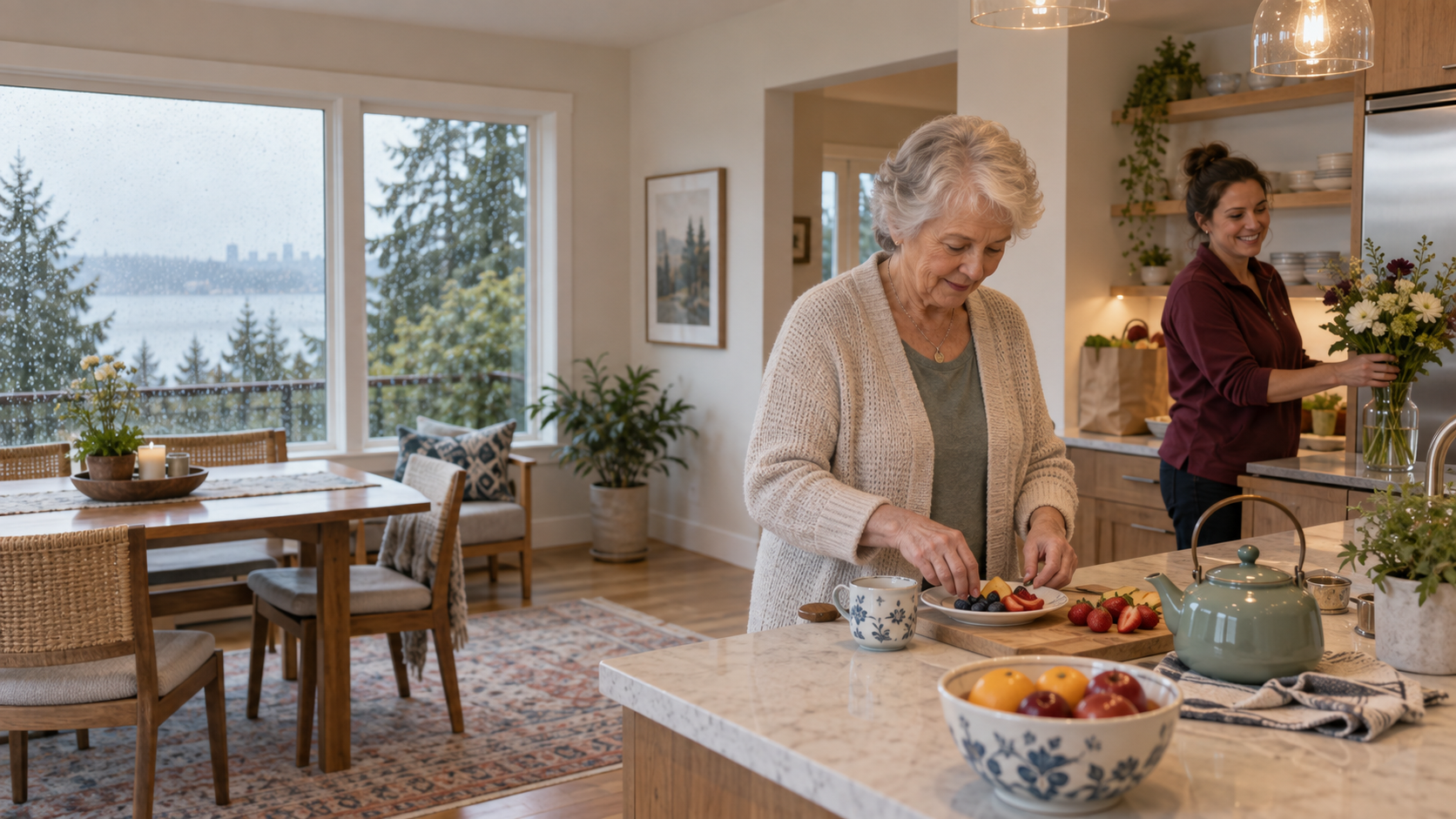
No. The terms are often used interchangeably, but they generally refer to different types of support.
Home care primarily helps with daily living, personal care, companionship, meals, household routines, and transportation. Home health care usually refers to skilled clinical services ordered for a specific medical need, such as nursing or therapy.
Some older adults need one or the other. Others benefit from both at different times.
Understanding the distinction helps families avoid two common mistakes: expecting non-medical care to replace medical treatment, or overlooking practical home support because a person does not currently need skilled nursing.
A good plan can change over time
Aging in place should not become a promise that someone must remain in the same house under every circumstance.
It is better understood as an ongoing plan that protects independence while responding honestly to change.
For one person, that may mean installing better lighting and arranging weekly help with groceries. For another, it may mean daily personal care, transportation, and closer coordination with healthcare providers. If the home eventually cannot support the person safely, considering another living arrangement is not a failure.
The goal is not to preserve an address at all costs. It is to help the older adult live safely, remain involved in decisions, and maintain as much independence as circumstances allow.
Elite Care Northwest provides physician-led Home Care Services for older adults and families across Seattle and King County. If your family is considering how to make aging at home more sustainable, you can Schedule a Consultation to discuss current routines, emerging concerns, and the kinds of support that may be useful.